"...look into all things with a searching eye” - Baha'u'llah (Prophet Founder of the Baha'i Faith)

Pages

Jul 26, 2014

Cardiovascular System – its functions and components

Circulatory system, or cardiovascular system, in humans, includes the combined functions of the heart, blood, and blood vessels. It transports oxygen and nutrients to organs and tissues throughout the body and carry away waste products. Among its vital functions, the circulatory system increases the flow of blood to meet increased energy demands during exercise and regulates body temperature. In addition, when foreign substances or organisms invade the body, the circulatory system swiftly conveys disease-fighting elements of the immune system, such as white blood cells and antibodies, to regions under attack. Also, in the case of injury or bleeding, the circulatory system sends clotting cells and proteins to the affected site, which quickly stop bleeding and promote healing.

The heart, blood, and blood vessels are the three structural elements that make up the circulatory system. The heart is the engine of the circulatory system. It is divided into four chambers: the right atrium, the right ventricle, the left atrium, and the left ventricle. The walls of these chambers are made of a special muscle called myocardium, which contracts continuously and rhythmically to pump blood. The pumping action of the heart occurs in two stages for each heart beat: diastole, when the heart is at rest; and systole, when the heart contracts to pump deoxygenated blood toward the lungs and oxygenated blood to the body. During each heartbeat, typically about 60 to 90 ml (about 2 to 3 oz) of blood are pumped out of the heart. If the heart stops pumping, death usually occurs within four to five minutes.

Blood consists of three types of cells: oxygen-bearing red blood cells, disease-fighting white blood cells, and blood-clotting platelets, all of which are carried through blood vessels in a liquid called plasma. Plasma is yellowish and consists of water, salts, proteins, vitamins, minerals, hormones, dissolved gases, and fats. 
(Encarta Encyclopedia)

Jul 19, 2014

The combined length of arteries, veins and capillaries in a human body

If all the arteries, veins, and capillaries in the human body were placed end to end, the total length would equal more than 100,000 km (more than 60,000 miles — they could stretch around the earth nearly two and a half times. 
(Encarta Encyclopedia)

Jul 12, 2014

Mental Energy - Feel the Flow of Enthusiasm

Call it drive, vigor, enthusiasm, or get-up-and-go. Call it zest, gusto, razzmatazz, or just plain oomph. It's what gives you ambition, puts a sparkle in your eye, and fills your day with spirit and glow. It's what makes you jump out of bed in the morning, fill your lungs with air, and charge out the front door ready to take on the entire world.

We're talking about the greatest form of energy on earth. It doesn't come from oil, coal, or natural gas. It comes from your mind.

When the energy is flowing, really flowing, nothing, but nothing, can stop you. You feel powerful, brilliant, and tremendously alive. You feel like King Kong with a Ph.D. But, when the energy stops flowing-ugh. You feel like Dr. Kong after he fell from the Empire State Building.

If you're like most people, your energy flow can get a little erratic from time to time, and you'd like to do something about it. You'd like to boost the wattage and assure yourself of a steady, never-ending supply of power.  Well? Don't just lie there like a big ape sprawled out on a Manhattan sidewalk! Read the sections below under the following headings:

A. The Brain in the Energetic Lane
B. Energy Is a State of Mind
C. A Deeper Sense of Self       
D. The Will to Succeed
E. Of Body and Mind

Jul 5, 2014

The Eightfold Buddhist Path -- freeing oneself from suffering rooted in ignorance

Buddha’s first teaching to his disciples is reported to have been the “First Turning of the Wheel of Dharma.” The Sanskrit word dharma has many shades of meaning. In its original Vedic context, it meant "duty" in the sense of social obligation, such as the obligation one feels as a member of a particular caste. In a Buddhist context, however, the meaning of dharma is closer to "truth" or "reality" (or even law," as in law of nature).

The Buddha's first teaching asserted four "truths about the nature of reality. The first was that ordinary life is characterized by suffering -- physical suffering, emotional suffering, and a sort of angst inherent in day-to-day existence. The second truth was that the cause of this suffering is the desire that follows from all beings' ignorance of the true nature of reality. The third truth was that it is possible to attain a state of being in which suffering is extinguished. The fourth truth concerned the Eightfold Path leading to that state. 

Jun 28, 2014

Alternative technologies concerning energy

What makes a technology conventional is its widespread use, and what makes it widespread is its low cost and convenience. Therefore, almost by definition, alternative technologies cost more than conventional ones, at least in terms of the price paid by the consumer. For example, among alternative technologies, wind power has come the closest to competing with conventional fossil fuels, yet it still costs about 50 percent more than coal-generated electricity. If, however, one takes into account the hidden costs of conventional energy and the noneconomic benefits of alternative technologies, then the equation changes.

Growing awareness of the environmental costs of conventional energy has led to increased demand for cleaner energy. Global warming, in particular, has altered the way many people think about the energy they consume - which, in turn, has begun to reshape the economic relationship between energy producers and consumers. As more and more consumers sign up for green energy programs and buy hybrid cars (both of which carry additional costs), energy companies are reconsidering whether the conventional wisdom of cheap, convenient, and plentiful above all still applies. Skeptics argue that the demand for cheap, large-scale energy resources will continue to trump the relatively new consumer preference for clean, renewable alternatives. On the other hand, if the era of cheap petroleum-based energy is indeed ending -- as shrinking petroleum reserves and rising gasoline prices indicate -- then one may not even have to factor in the hidden costs and benefits for today's alternative technologies to become tomorrow's conventional resources.

Jun 21, 2014

Slide Rule

A mechanical device formerly used by engineers and scientists for rapid and approximate multiplication, division, extraction of roots, raising to powers, and other simple computations. The slide rule has been almost totally superseded by the small hand-held electronic calculator. The principle of the slide rule is the translation of all computations to equivalent additions or subtractions that can be carried out on a set of scales sliding over each other. Thus, two uniformly graduated marked scales can be used for addition or subtraction, multiplication, division, powers, and logarithms. Other scales, such as for sine, cosine, and tangent, and logarithm and for calculations involving p (pi) are also found on the usual rectilinear slide rule. A glass runner or cursor with a finely engraved vertical line is provided for easier alignment of the scales.

The computational accuracy possible depends on the size of the slide rule and on the care with which the scales are printed. The commonly used 10-in. slide rule permits multiplications and divisions to be made with an accuracy of about 1/10th percent, which suffices for many engineering calculations. Both the rectilinear and the less commonly used circular slide rule were invented by the English mathematician William Oughtred shortly after the discovery of logarithms. Various special slide rules have been devised for the solution of widely applicable engineering formulas, or for business calculations, such as the determination of interest, compound interest accumulation, and depreciation. 
(Adapted from Encarta Encyclopedia)

Jun 14, 2014

Renewable Energy – wind and solar

The first wind turbines actually predate the electric power grid, with two near-simultaneous developments in the late 19th century. The Scottish engineer James Blyth constructed a 33- foot electricity-generating wind turbine in 1887, and the following year the American engineer Charles Brush built the first automatic wind turbine, wiring the first electrically powered building in Ohio. Likewise, throughout the 1800s, scientists were experimenting in the various technologies that make photovoltaic solar panels possible; the first solar powered steam engine was built in 1861.

Since then, the use of wind and solar power has grown steadily, with a surge in recent years. Wind power, while, still providing a small total percentage of U.S. power, is growing much more rapidly than solar power. From 1990 to 2008, U.S. production of wind power grew from 300 trillion Btu annually to 510 trillion; solar has increased modestly from 60 trillion BN to 90 trillion. Shipments of solar photovoltaic cells and modules continues to expand, however. From 2000 to 2008, U.S. manufacturers increased shipments of photovoltaic components from 20,000 modules in 2000 to 524,000 modules in 2008. Production of hydroelectric power, the nation's largest renewable energy source, has remained more or less steady since 1990, declining somewhat from 3.05 quadrillion Btu to 2.45 quadrillion Btu in 2008.

Jun 7, 2014

Environmentalism in the United States

The first federal environmental act was the establishment of Yellowstone National Park in March 1872 in the territories of Montana and Wyoming. Instead of promoting the land for development, Congress and President Ulysses S. Grant declared that it should be preserved "as a public park or pleasuring ground for the benefit and enjoyment of the people." As the first such preserve in the world, Yellowstone inaugurated an international national park movement that currently includes some 1,200 parks or preserves in 100 countries, including 391 in the United States.

The Scottish naturalist John Muir became an early advocate for preservation after his travels and scientific work convinced him that some natural areas need protection from human exploitation. Muir founded the Sierra Club in 1892 to that end and urged President Theodore Roosevelt to join the cause. Roosevelt, himself known as an ardent outdoorsman, eventually dedicated more than 150 million acres to national parks and forests, and founded the US. Forest Service, which manages forests for water and timber resources while protecting them for wildlife and recreation. The first chief of the Forest Service, Gifford Pinchot, promoted a "wise use" strategy of wilderness management that proposed, in contrast to Muir, that nature could be safely commercialized.

May 31, 2014

The adverse effect of environmental changes on biodiversity

While pollution and global warming have obvious effects on human health, ecologists also define environmental health according to biodiversity. Biodiversity measures the variety of living things and their interactions on three levels: genetics, species, and ecosystem diversity. The number of known species - characterized by scientific analysis and description - is more than 1.7 million, including nearly 1 million species of insects, about 14,000 species of amphibians and reptiles, and 5,400 mammalian species. However, there are many other species living on Earth, including trillions of microscopic organisms like bacteria. These species interact to form sustainable check-and balance networks like the food chain.

Human population growth, deforestation, pollution, and global warming have caused a rapid loss of biodiversity. Today's extinction rate is estimated to be 1,000 to 10,000 times higher than the natural rate, and some scientists believe we are in the midst of a mass extinction. For example, the International Union for Conservation of Nature reported in 2008 that 30 percent of amphibian species are critically endangered or vulnerable. This number increased 2,588 percent between 1996 (18 species) and 2010 (484 species). (Adapted from ‘The New York Times ‘Smarter by Sunday – 52 Weekends of Essential Knowledge for the Curious Mind’)

May 24, 2014

The world's first designated wilderness

In 1924, due to Aldo Leopold's (an American environmentalist) efforts as a Forest Service employee, the Gila National Forest in New Mexico became the world's first designated wilderness. This designation allows travel only by foot or horseback and bans any commercial activity except grazing in order to protect the usefulness of the wilderness for cleaning air and reducing climate change, as well as providing clean water, wildlife habitat, and natural recreational experiences. (Adapted from ‘The New York Times ‘Smarter by Sunday – 52 Weekends of Essential Knowledge for the Curious Mind’)

May 17, 2014

Number of known species

The number of known species - characterized by scientific analysis and description - is more than 1.7 million, including nearly 1 million species of insects, about 14,000 species of amphibians and reptiles, and 5,400 mammalian species. It is estimated that there are also trillions of microscopic organisms like bacteria. (Adapted from 'The New York Times ‘Smarter by Sunday – 52 Weekends of Essential Knowledge for the Curious Mind’) 

May 10, 2014

Air & Liquid Air

Air is the mixture of gases that surrounds the Earth. Air contains mainly the gases nitrogen and oxygen, with small amounts of argon and other noble gases and carbon dioxide. The proportions of these gases in air are the same anywhere around the world. Air also contains water vapor, dust, and polluting gases, which vary in amount from place to place. When air is cooled to -328°F (-200°C), most of the gases condense, forming a blue liquid called liquid air. (Dictionary of Science, by Neil Ardley)

May 3, 2014

America’s Independence Day

Independence Day, commonly known as the Fourth of July, is a federal holiday in the United States commemorating the adoption of the Declaration of Independence on July 4, 1776, declaring independence from the Kingdom of Great Britain (now officially known as the United Kingdom). Independence Day is commonly associated with fireworks, parades, barbecues, carnivals, fairs, picnics, concerts, baseball games, family reunions, and political speeches and ceremonies, in addition to various other public and private events celebrating the history, government, and traditions of the United States. Independence Day is the National Day of the United States.

During the American Revolution, the legal separation of the Thirteen Colonies from Great Britain occurred on July 2, 1776, when the Second Continental Congress voted to approve a resolution of independence that had been proposed in June by Richard Henry Leeof Virginia declaring the United States independent from Great Britain. After voting for independence, Congress turned its attention to the Declaration of Independence, a statement explaining this decision, which had been prepared by a Committee of Five, with Thomas Jefferson as its principal author. Congress debated and revised the wording of the Declaration, finally approving it on July 4. A day earlier, John Adams had written to his wife Abigail:

The second day of July, 1776, will be the most memorable epoch in the history of America. I am apt to believe that it will be celebrated by succeeding generations as the great anniversary festival. It ought to be commemorated as the day of deliverance, by solemn acts of devotion to God Almighty. It ought to be solemnized with pomp and parade, with shows, games, sports, guns, bells, bonfires, and illuminations, from one end of this continent to the other, from this time forward forever more.

Apr 26, 2014

Ben-Gurion -- Israel's "founding father" and first Prime Minister

Born David Gruen in Poland, Ben-Gurion became committed to Zionism, the movement to settle and unite Jews in Palestine, under the influence of his father and grandfather. He studied in Warsaw, where he joined Po’alei Zion (Workers of Zion), a socialist workers party. Ben-Gurion saw Zionism as a practical idea to be carried out by Jewish immigration to Palestine and building the land through collective labor. In 1906 he moved to Jaffa, Palestine (now part of Tel Aviv-Yafo, Israel), and worked as a farmer. There he was elected to the central committee of Po’alei Zion and began organizing workers into unions. In 1910 he moved to Jerusalem and joined the editorial staff of a new Hebrew-language newspaper, Ahdut (Unity), publishing articles under the name Ben-Gurion (Hebrew for "son of the young lion"). He enrolled at the University of Constantinople in present-day Turkey in 1912 and earned a law degree in 1914. He then returned to Palestine and resumed his work as a union organizer, but in 1915 he traveled to the United States after he and thousands of other Zionists were exiled by the Ottoman Empire authorities who controlled Palestine.

Apr 19, 2014

The Great Wall of China

Great Wall (China), popular name for a semi-legendary wall built to protect China’s northern border in the 3rd century BC, and for impressive stone and earthen fortifications built along a different northern border in the 15th and 16th centuries AD, long after the ancient structure had disappeared. Ruins of the later wall are found today along former border areas from Bo Hai (a gulf of the Yellow Sea) in the east to Gansu Province in the west. The Great Wall is visited often near Beijing, at a site called Ju-yong-guan, and at its eastern and western extremes.

Perhaps China's best known monument—even national symbol—the Great Wall is not what most people imagine it to be. The existing wall is not several thousand years old, nor is it, as is widely asserted, visible from outer space (astronauts confirm this). Indeed, the Great Wall is not even a single, continuous structure. Rather, it consists of a network of walls and towers that leaves the frontier open in places.

Apr 12, 2014

Colonial America: 1492-1763

European nations came to the Americas to increase their wealth and broaden their influence over world affairs. The Spanish were among the first Europeans to explore the New World and the first to settle in what is now the United States.

By 1650, however, England had established a dominant presence on the Atlantic coast. The first colony was founded at Jamestown, Virginia, in 1607. Many of the people who settled in the New World came to escape religious persecution. The Pilgrims, founders of Plymouth, Massachusetts, arrived in 1620. In both Virginia and Massachusetts, the colonists flourished with some assistance from Native Americans. New World grains such as corn kept the colonists from starving while, in Virginia, tobacco provided a valuable cash crop. By the early 1700s enslaved Africans made up a growing percentage of the colonial population. By 1770, more than 2 million people lived and worked in Great Britain's 13 North American colonies ( http://www.americaslibrary.gov/)

Apr 5, 2014

September 30, 1882: The World's First Hydroelectric Power Plant Began Operation

 When you look at rushing waterfalls and rivers, you may not immediately think of electricity. But hydroelectric (water-powered) power plants are responsible for lighting many of our homes and neighborhoods. On September 30, 1882, the world's first hydroelectric power plant began operation on the Fox River in Appleton, Wisconsin. The plant, later named the Appleton Edison Light Company, was initiated by Appleton paper manufacturer H.J. Rogers, who had been inspired by Thomas Edison's plans for an electricity-producing station in New York. 

Unlike Edison's New York plant which used steam power to drive its generators, the Appleton plant used the natural energy of the Fox River. When the plant opened, it produced enough electricity to light Rogers's home, the plant itself, and a nearby building. Hydroelectric power plants of today generate a lot more electricity. By the early 20th century, these plants produced a significant portion of the country's electric energy. The cheap electricity provided by the plants spurred industrial growth in many regions of the country. To get even more power out of the flowing water, the government started building dams. 

In 1933, the U.S. government established the Tennessee Valley Authority (TVA), which introduced hydroelectric power plants to the South's troubled Tennessee River Valley. The TVA built dams, managed flood control and soil conservation programs, and more. It greatly boosted the region's economy. And this development happened in other places as well. Soon, people across the country were enjoying electricity in homes, schools, and offices, reading by electric lamp instead of candlelight or kerosene. New electricity-powered technologies entered American homes, including electric refrigerators and stoves, radios, televisions, and can openers. Today, people take electricity for granted, not able to imagine life without it. (http://www.americaslibrary.gov/)

Mar 29, 2014

Sources of Energy – until 1859 when the first oil well in the United States was drilled in Pennsylvania

When the steam engine was invented at the beginning of the 18th century, most sources of fuel worldwide were the same as they had been for centuries: wood for cooking, oil for lighting, coal for heating and industry. The advent of commercially successful steam power in 1712 allowed for machinery and engines that were larger and more capable than any machines had ever been, catalyzing the dramatic changes of the Industrial Revolution. During the 19th century, continuous improvements to steam engine design transformed factories and built railroads across Europe and the Americas. Both inventors and engineers knew, however, that steam power had significant limitations. Steam must be generated by burning fuel, usually coal: and steam engines were large and bulky to allow for a furnace. The first steam-powered locomotive, invented in 1804 by the English engineer Richard Trevethick, was so heavy it broke the rails it rode on. From the earliest days of the Industrial Revolution, engineers looked for alternatives to steam that would allow for lighter, more powerful engines.

Internal combustion provided one such alternative. For centuries, inventors had imagined and tinkered with internal combustion engines; the medieval Arab scholar Al-Jazari described twin-cylinder reciprocating pistons in 1206, and Leonardo da Vinci sketched compressionless engines in 1509. The modem combustion engine was the British inventor Robert Street's 1794 model, which used exploding gas to drive the pistons.

Mar 22, 2014

Mar 15, 2014

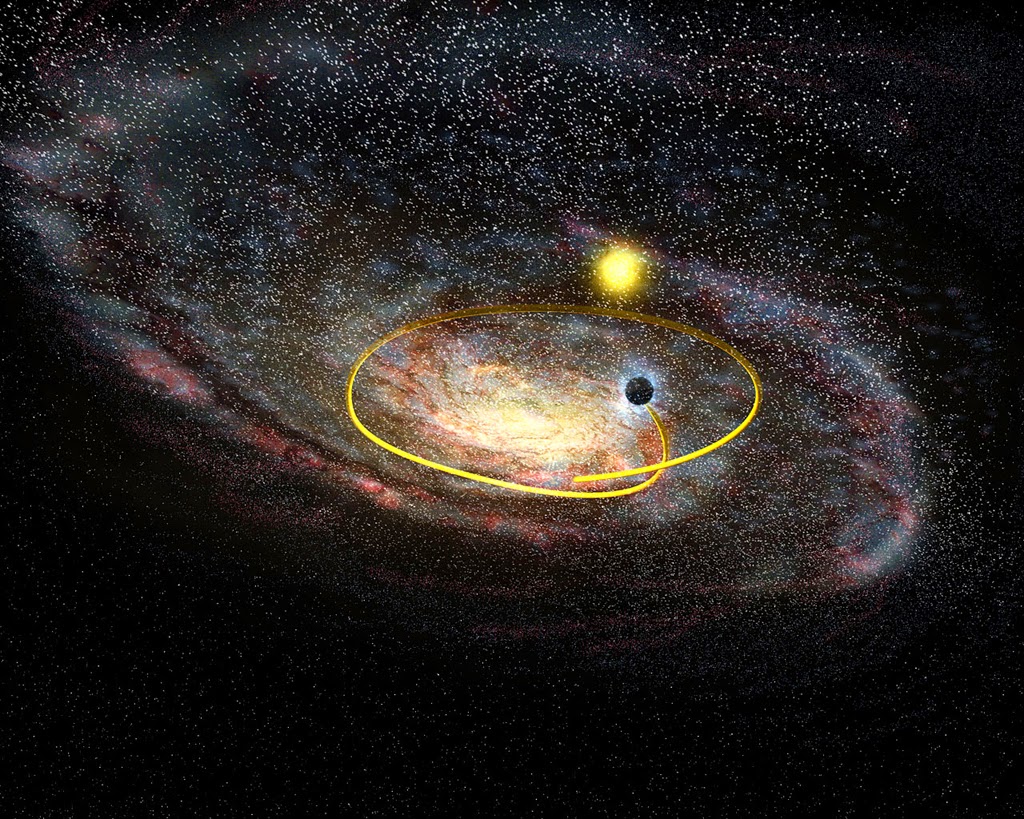
A black hole is born …

The sun is of only average mass, starwise, and after burning through the last of its hydrogen fuel in about five billion years, its outer layers will drift away, and the core will eventually compact to become what's known as a white dwarf, an Earth-size ember of the cosmos.

For a star ten times as big as the sun, death is far more dramatic. The outer layers are blasted into space in a supernova explosion that, for a couple of weeks, is one of the brightest objects in the universe. The core, meanwhile, is squeezed by gravity into a neutron star, a spinning ball bearing a dozen miles in diameter. A sugar-cube-size fragment of a neutron star would weigh a billion tons on Earth; a neutron star's gravitational pull is so severe that if you were to drop a marshmallow on it, the impact would generate as much energy as an atom bomb.

But this is nothing compared with the death throes of a star some 20 times the mass of the sun. Detonate a Hiroshima-like bomb every millisecond for the entire life of the universe, and you would still fall short of the energy released in the final moments of a giant-star collapse. The star's core plunges inward. Temperatures reach 100 billion degrees. The crushing force of gravity is unstoppable. Hunks of iron bigger than Mount Everest are compacted almost instantly into grains of sand. Atoms are shattered into electrons, protons, neutrons. Those minute pieces are pulped into quarks and leptons and gluons. And so on, tinier and tinier, denser and denser, until. ..

Until no one knows. When trying to explain such a momentous phenomenon, the two major theories governing the workings of the universe – general relativity and quantum mechanics – both go haywire, like dials on an airplane wildly rotating during a tailspin.

The star has become a black hole. (Michael Finkel, National Geographic)

Mar 2, 2014

Water bears – micro-animals theoretically capable of surviving a space journey without protection

Tardigrades (also known as water bears or moss piglets) are water-dwelling, segmented micro-animals, with eight legs. They were first described by the German pastor J.A.E. Goeze in 1773. The name Tardigrada (meaning "slow stepper") was given three years later by the Italian biologist Lazzaro Spallanzani.

Usually, tardigrades are about 0.5 mm (0.020 in) long when they are fully grown. They are short and plump with four pairs of legs, each with four to eight claws also known as "disks". The animals are prevalent in mosses and lichens and feed on plant cells, algae, and small invertebrates. When collected, they may be viewed under a very-low-power microscope, making them accessible to students and amateur scientists. Their mouths have sharp pointy objects, called stylets. They use their stylets to cut into moss leaves or algae, their main foods. Then they suck the juices from the plant. Tardigrades live worldwide in moist land habitats, along rocky shorelines, and on the bottoms of streams, lakes, and oceans.

Feb 23, 2014

The Four Gospels

A gospel (from Old English, gōd spell "good news") is a writing that describes the life of Jesus. The word is primarily used to refer to the four canonical gospels: the Gospel of Matthew, Gospel of Mark, Gospel of Luke and Gospel of John, probably written between AD 65 and 80. They appear to have been originally untitled; they were quoted anonymously in the first half of the second century (i.e. 100 - 150) but the names by which they are currently known appear suddenly around the year 180. The first canonical gospel written is thought by most scholars to be Mark (c 65-70). (Wikipedia, the online free encyclopedia) 

Feb 16, 2014

Dolphins can stay constantly alert for more than two weeks

Dolphin (aquatic mammal), fast-swimming mammal belonging to the order Cetacea, which also includes whales and porpoises. Sleek and powerful swimmers, dolphins are found in seas throughout the world; some inhabit freshwater rivers and lakes. Characteristic features of most dolphins are long snouts with rows of sharp teeth, and rounded foreheads with a nostril on top, known as the blowhole.

There are at least 40 species of dolphins. Dolphins resemble fish in many ways, but they exhibit a number of true mammalian characteristics: They are warm-blooded, breathe air, and nurse their young on milk. Dolphins and porpoises have a similar appearance, but dolphins can be distinguished from porpoises by their more prominent snouts and conical teeth. Porpoises have blunt snouts, chisel-shaped teeth, and a stouter body than dolphins.

Sailors have long considered the presence of dolphins cruising alongside the bows of ships as a good omen and a promise of fair weather. Dolphins also figure prominently in folklore, often appearing in works of art, on coins and currency, and on stamps. Ancient Greek coins depicted the son of Poseidon seated on a dolphin, and the ancient Roman author Pliny the Elder wrote a story of a dolphin that carried a poor man's son to school each day. Many classical writers described how dolphins harnessed to chariots helped maidens in distress. A dolphin was on the coat of arms of the dauphin, the title given the eldest son and heir of the king of France.

Feb 9, 2014

Some interesting tidbits about various States of the United States

  • Alabama: Was the first state to have 9-1-1, started 1968.
  • Alaska: One out of every 64 people has a pilot's license. 
  • Arizona: Is the only state in the continental U.S. that does not follow Daylight Savings Time. 
  • Arkansas: Has the only active diamond mine in the U.S. 
  • California: Its economy is so large that if it were a country, it would rank seventh in the entire world. 
  • Colorado: In 1976 it became the only state to turn down the Olympics. 
  • Connecticut: The Frisbee was invented here at Yale University 
  • Delaware: Has more scientists and engineers than any other state. 
  • Florida: At 874.3 square miles, Jacksonville is the largest city in the U.S. 
  • Georgia: It was here, in 1886, that pharmacist John Pemberton made the first vat of Coca-Cola....interesting! 
  • Hawaii: Hawaiians live, on average, five years longer than residents of any other state. 
  • Idaho: TV was invented in Rigby, Idaho, in 1922. 
  • Illinois: Has a Governor in jail, one pending jail, and is the most corrupt state in the union! 

Feb 1, 2014

Early Music -- during ancient Greek and Roman empires (500 B.C. to 300 A.D.)

The first European music is that of the ancient Greeks and Romans, dating from roughly 500 B.C. to A.D. 3OO. Fewer than a dozen examples of Greek music from this period, written in an alphabetical notation, survive. Ancient Greek philosophers believed that music originated from the god Apollo, as well as from the mythological musician Orpheus and other divinities. They also believed that music reflected in microcosm the laws of harmony that rule the universe, and that music influenced human thought and actions.

The Greek philosopher Pythagoras (ca. 580 B.C.-ca. 500 B.C.) discovered the mathematical relationships between specific frequencies and musical inrervals, using a single-string instrument (called a monochord) to produce the various intervals. For example, two notes whose frequencies form a ratio of 2:1 sound one octave apart; a ratio of 3:2 forms an interval of a fifth, and a ratio of 4:3 forms a fourth. These basic intervals combine to create the modes and scales on which all Western melodies and harmony are based.

Jan 26, 2014

How many hairs does the average person have on his or her head and how much does human hair grow in a year?

The amount of hair covering varies from one individual to another. An average person has about 100,000 hairs on their scalp. Most redheads have about 90,000 hairs, blonds have about 140,000, and brunettes fall in between these two figures. Most people shed between 50 to 100 hairs daily. Each hair grows about 5 inches (12.7 centimeters) every year. (The Handy Science Answer Book, compiled by the Science and Technology department of the Carnegie Library of Pittsburgh)

Jan 20, 2014

Can a person get a suntan through a window?

No. The ultraviolet radiation that causes suntan does not pass through glass. A tan is the skin 's natural defense against these harmful sun rays. Pigment cells in the lower skin level make more pigment and melanin to absorb the ultraviolet rays. As the pigment spreads into the top layer of the skin, it becomes darker. (The Handy Science Answer Book, compiled by the Science and Technology department of the Carnegie Library of Pittsburgh)

Jan 15, 2014

The original meaning of the word “scapegoat”

As described in Leviticus 16:1-27, part of a Hebrew ritual on the Day of Atonement involved the presentation of two male goats at the altar of the tabernacle. After lots were cast, one goat was sacrificed to the Lord; the other, the  scapegoat’, was set aside for Azazel, an evil spirit of the wilderness. The high priest transferred the sins of the people onto this goat and sent it away into the desert. (The Book of Answers, by Barbara Berliner)

Jan 10, 2014

What to do when you get sick -- making the right decisions

When you get sick, you must decide what course of action to take in order to recover your health. If you do not accept this responsibility, others will decide for you and will not necessarily make the best choices. The most important decision is whether visits to health professionals will help or hinder your own healing system. You will need to understand the nature of your illness and to know whether conventional medicine can do anything for it without reducing the possibility of spontaneous healing. You will also want to know whether any alternative treatments exist that might be of benefit.

A good place to start is with a review of what conventional medicine can do effectively and what it cannot. For example, it is very effective at managing trauma, so that if I were in a serious automobile accident, I would want to go directly to an urgent care facility in a modem hospital, not to a shaman, guided imagery therapist, or acupuncturist. (Once out of danger, I might use those other resources to speed up the natural healing process.) Conventional medicine is also very good at diagnosing and managing crises of all sorts: hemorrhages, heart attacks, pulmonary edema, acute congestive heart failure, acute bacterial infections, diabetic comas, bowel obstructions, acute appendicitis, and so forth. You must be able to recognize symptoms of potentially serious conditions, so that you will not waste time before getting needed treatment. In general, symptoms that are unusually severe, persistent, or out of the range of your normal experience warrant immediate investigation.

Jan 3, 2014

Color Blindness

Color blindness is a defect of vision affecting the ability to distinguish colors, occurring mostly in males. It involves a person’s inability to distinguish one or more of the three colors red, green, and blue. It is noteworthy to know that the ability to see color exists in only a few vertebrates, including, among others, man and the other primates, fish, amphibians, some reptiles, and some birds; and in bees and butterflies.

The first detailed report on this condition was written by the British chemist John Dalton, who was himself afflicted with it. Total color blindness, in which all hues are perceived as variations of gray, is known as achromatopsia or monochromatism. This condition is congenital, extremely rare, and affects men and women almost equally. Partial color blindness, called dichromatism, consists generally of the inability to differentiate between the reds and the greens or to perceive either reds or greens; infrequently, the confusion may involve the blues or the yellows. Dichromatism is the most common form of color blindness, affecting about 7 percent of men and less than 1 percent of women. Dichromatism is identified as a sex-linked hereditary characteristic. Color blindness also may occur as a temporary condition following a serious illness.

Dec 28, 2013

Heavy Water

Heavy water contains heavy hydrogen, or deuterium, instead of normal hydrogen.  Deuterium is the stable, nonradioactive isotope of hydrogen with atomic weight 2.01363 and symbol D, or 2H. It is commonly called heavy hydrogen because its atomic weight is approximately double that of ordinary hydrogen, but it has identical chemical properties. Deuterium has about twice the atomic weight of normal hydrogen because its nucleus contains a proton and a neutron, instead of just a proton. Hydrogen as it occurs in nature contains approximately 0.02 percent of deuterium. The boiling point of deuterium is -249.49° C (-417.08° F), or 3.28° C (5.90° F) higher than that of ordinary hydrogen. Heavy water (deuterium oxide, D2O) boils at 101.42° C (214.56° F) as compared to 100° C (212° F), the boiling point of ordinary water. It freezes at 3.81° C (38.86° F) as compared to 0° C (32° F) for ordinary water. Its density at room temperature is 10.79 percent greater than that of ordinary water.

Deuterium, which was discovered by the American chemist Harold Urey and his associates in 1932, was the first isotope to be separated in a pure form from an element. Several methods have been used to separate the isotope from natural hydrogen. The two processes that have been most successful have been fractional distillation of water and a catalytic exchange process between hydrogen and water. In the latter system, when water and hydrogen are brought together in the presence of a suitable catalyst, about three times as much deuterium appears in the water as in hydrogen. Deuterium has also been concentrated by electrolysis, centrifuging, and fractional distillation of liquid hydrogen.

Dec 21, 2013

Book of the Dead

The name generally given to a large collection of funerary texts of various dates, containing magical formulas, hymns, and prayers believed by the ancient Egyptians to guide and protect the soul (Ka) in its journey into the region of the dead (Amenti). Egyptians believed that the knowledge of these texts enabled the soul to ward off demons attempting to impede its progress, and to pass the tests set by the 42 judges in the hall of Osiris, god of the underworld. These texts also indicated that happiness in the afterlife was dependent on the deceased's having led a virtuous life on earth. The earliest religious (funerary) texts known were found cut in hieroglyphs on the walls inside the pyramids of the kings of the 5th and 6th Dynasties of the Old Kingdom; these became known as the Pyramid Texts. A famous example is found in the pyramid of Unas (reigned about 2356-2323 BC), the last king of the 5th Dynasty. In the first Intermediate Period and in the Middle Kingdom private individuals had these texts painted on coffins, from which the alternate name Coffin Texts is derived. By the 18th Dynasty the texts were inscribed on papyri placed in the mummy case; these papyri were frequently from 15 to 30 m (50 to 100 ft) long and illustrated in color.

Dec 14, 2013

Solar-terrestrial effects

Besides providing light and heat, the Sun affects the Earth through its ultraviolet radiation, the steady stream of the solar wind, and the particle storms of great flares. The near-ultraviolet radiation from the Sun produces the ozone layer, which in turn shields the planet from such radiation. The soft (long-wavelength) X rays from the solar corona produce those layers of the ionosphere that make short-wave radio communication possible. The harder (shorter-wavelength) X-ray pulses from flares ionize the lowest ionospheric layer, producing radio fadeouts. The Earth's rotating magnetic field is strong enough to block the solar wind, forming the magnetosphere, around which the solar particles and fields flow. On the side opposite to the Sun, the field lines stretch out in a structure called the magnetotail. When shocks arrive in the solar wind, a short, sharp increase in the field of the Earth is produced. When the interplanetary field switches to a direction opposite the Earth's field, or when big clouds of particles enter it, the fields in the magnetotail reconnect and energy is released, producing the aurora borealis (northern lights). Big flares or coronal mass ejections bring clouds of energetic particles that form a ring current around the magnetosphere, which produces sharp fluctuations in the Earth's field called geomagnetic storms. These phenomena disturb radio communication and produce voltage surges in long-distance transmission lines and other long conductors.

Dec 6, 2013

Population growth in Paris and New York

It is estimated that in 1800 the population of Paris was about 550,000 and New York’s about 60,000. In 1931, however, these numbers increased to 2,800,000 for Paris and 7,400,000 for New York. (Adapted from 'The Timetables of History', by Bernard Grun, based upon Werner Stein’s Kulturfahrplan)

Dec 1, 2013

The Splice of Life

Dr. James Watson, left, and Dr. Francis Crick with their 
Nobel Prize-winning model of the DNA molecule
Genetic engineering is the process that inserts genes from one living organism into the cells of another, thereby custom-tailoring them to do work they weren't designed for. For example, thanks to genetic engineering, or recombinant-DNA technique, millions of bacteria are kept busy churning out precious human insulin. Scientists built the micro-factories by slipping the human gene responsible for the creation of insulin into E. coli, a mild-mannered bacterium found in our intestinal tract. So far, genetic engineering has been most successful with microorganisms, plants, mice (whose immune systems have been made to mimic those of human beings), and-Stephen King, take note -- livestock: pigs that gain weight faster, cows that give more milk. Science is still working on the problem of getting genetically altered DNA back into a human cell and, we're told, isn't even close to a solution. Someday, however, we may be able to replace or repair bad genes, like the ones responsible for such diseases as cystic fibrosis, sickle-cell anemia, and perhaps even cancer.

Nov 25, 2013

Strategic minerals

Strategic minerals are minerals essential to the national defense -- the supply of which a country uses but cannot produce itself. 33% to 50% of the 80 minerals used by industry could be classed as strategic minerals. Wealthy countries, such as the United States, stockpile these minerals to avoid any crippling effect on their economy or military strength if political circumstances were to cut off their supplies. The United States, for instance, stockpiles bauxite (14.5 million tons), manganese (2.2 million tons), chromium (1.8 million tons), tin (185,000 tons), cobalt (19,000 tons), tantalum (635 tons), palladium (1.25 million troy ounces), and platinum (453,000 troy ounces). (The Handy Science Answer Book, compiled by the Science and Technology department of the Carnegie Library of Pittsburgh)

Nov 20, 2013

Electron Microscope

A microscope that uses electrons instead of visible light to produce highly magnified images of objects. Scientists use electron microscopes in many different fields of research, including medicine, biology, chemistry, metallurgy, entomology (the study of insects), and physics. Since its introduction in the 1930s, the electron microscope has revolutionized the study of microscopic structures and surfaces. See also Microscope.

Microscopes can only resolve structures that are larger than the length of the waves (such as light waves) reflecting off of them. Electron microscopes are able to obtain much higher powers of magnification than standard visible light microscopes because electrons have much shorter wavelengths associated with them than light waves. The highest magnification achievable with light microscopes is about 2,000X (times); modern electron microscopes can achieve magnifications approaching 1,000,000X.

Their invention
The invention of the electron microscope was made possible by a number of theoretical and experimental advances in physics and engineering. The main concept on which the electron microscope is founded—that electrons have a wavelike nature—was hypothesized by French physicist Prince Louis Victor de Broglie in 1923 (see Quantum Theory). In 1927, de Broglie’s hypothesis was experimentally verified by American physicists Clinton J. Davisson and Lester H. Germer, and independently by English physicist George Paget Thomson. In 1932 German engineers Max Knoll and Ernst Ruska built the first transmission electron microscope. In 1938 Ruska and German engineer Bodo von Borries built the first model of the commercial TEM for the Siemens-Halske Company in Berlin, Germany. The English engineer Sir Charles Oatley invented the SEM in its present form in 1952.

Nov 14, 2013

intra-abdominal fat

what is it?  Fat packed deep in the abdomen, in and around your internal organs. Women with waists over 35 inches and men with waists over 40 inches are likely to have it. (For people of Asian descent, risk rises with measurements over 31.5 inches for women and 37.5 for men.) A large waist is dangerous even if your body weight is within the " healthy" range for your height. To measure your waist, wrap a tape measure snugly around your midsection at about belly-button height.

What causes it? Too many hamburgers, too much TV, and too much of all those other activities that keep you sitting down, like working and driving. In other words, a diet high in calories and a life devoid of exercise. Chronic stress plays a role, too, especially for women, since the stress hormone cortisol directs your body to store more fat in your abdomen.

1. A high-calorie diet, lack of exercise, and chronic stress conspire to prompt your body to store dangerous fat around your liver, pancreas, and other internal organs.

2. Intra-abdominal fat pumps free fatty acids and inflammatory compounds into the portal vein, the "superhighway" that delivers blood from your lower abdomen to the liver, pancreas, and other internal organs.

3. An influx of free fatty acids causes your liver to produce more “bad” LDL cholesterol, less “good” HDL cholesterol, more blood sugar, and less adiponectin, a hormone that regulates the use of blood sugar and keeps appetite in check. The result: Your risk of heart disease and diabetes rises.

4. The inflammatory compounds secreted by fat cells encourage the growth of plaque inside artery walls, boost blood pressure, and make blood more likely to clot - a recipe for a heart attack. They also make cells resistant to insulin, which in turn contributes to diseases from Alzheimer's to cancer.

Nov 3, 2013

Breast Cancer – What we Know

The incidence of breast cancer in the United States began climbing steadily in the early 1970s, and is now the highest ever seen in human history. Nearly 50,000 American women die of the disease every year. In the face of this tragedy, a great deal of attention has been given to genetics, but the presence of the breast cancer susceptibility gene, called BRCA-1, only accounts for at most 5 percent of breast cancers.

Exercise is very important to breast cancer risk. In fact, women who exercise (walk) for four hours per week lower their risk by 33 percent. And women who exercise more than that lower their risk even further. [29]

But diet, it turns out, is even more important. . .

What We Know

Death rate from breast cancer in the United States: 22.4 (per 100,000)

Death rate from breast cancer in Japan: 6.3 (per 100,000)

Death rate from breast cancer in China: 4.6 (per 100,000)

Primary reasons for difference: People in China and Japan eat more fruits and vegetables and less animal products, weigh less, drink less alcohol, and get more exercise than people in the United States.

Oct 26, 2013

The rainiest place on Earth

The wettest place in the world is Tutunendo, Colombia, with an average annual rainfall of 463.4 inches (1177 centimeters) per year. The place that has the most rainy days per year is Mount Waialeale (means ‘rippling water’) on Kauai, Hawaii. It has up to 350 rainy days annually.

In contrast the longest rainless period in the world was from October, 1903, to January, 1918, at Arica, Chile - a period of 14 years. In the United States the longest dry spell was 767 days at Bagdad, California, from October 3, 1912, to November 8, 1914. (The Handy Science Answer Book, compiled by the Science and Technology department of the Carnegie Library of Pittsburgh)